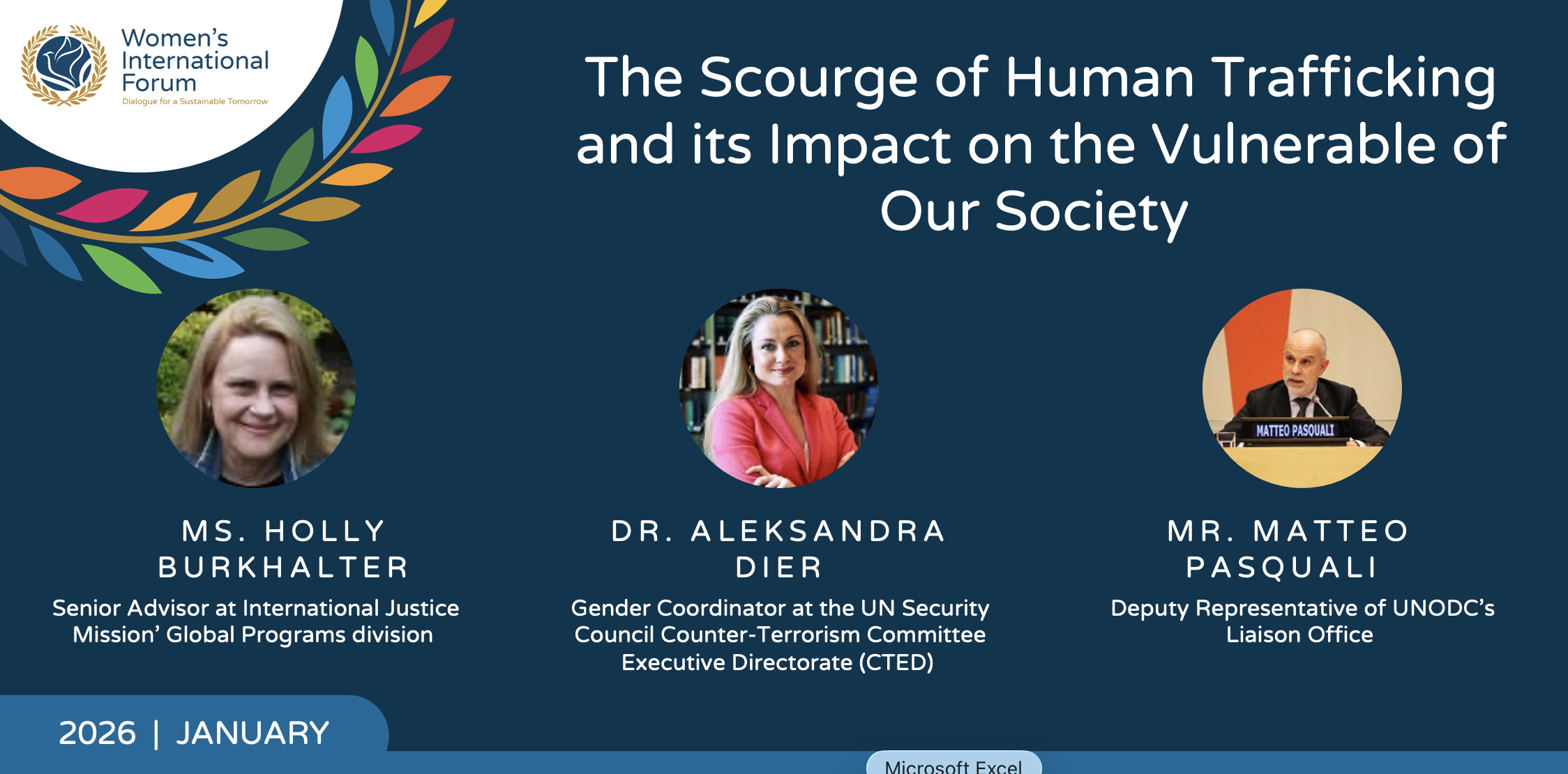
The Scourge of Human Trafficking and its Impact on the vulnerable of our Society
Human trafficking is a serious and growing crisis that affects every region of the world. It is one of the most profitable illicit industries whose annual turnovers exceed $239 billion and in which millions of people are trafficked annually.
Last November, the UN General Assembly adopted a resolution titled “2025 Political Declaration on the Implementation of the United Nations Global Plan of Action to Combat Trafficking in Persons” in which all UN member states reiterated their strong condemnation of trafficking in persons which constitutes a serious crime and a grave offense to human dignity.
Human trafficking disproportionately affects vulnerable groups—such as women, children, migrants, and marginalized communities often due to poverty, lack of education, and social exclusion. It breeds corruption and violence and undermines societal stability. Factors such as armed conflicts, economic fallout and natural disasters have exacerbated the problem. Trafficking for both labour and sexual exploitation remain a significant issue.
Among the rising concerns is the growing number of children being trafficked, with a significant increase in the proportion of girls affected–rising from 31 per cent to 38 per cent. According to UN data, women and girls make up 61 per cent of victims, and forced labour now accounts for 42 per cent of cases. Despite efforts to combat human trafficking, including through international and regional cooperation and with many countries adopting laws dealing with trafficking in persons, the rate of conviction remains extremely low. Combatting human trafficking imposes heavy costs on governments and institutions due to the requirements for law enforcement, victim support and judicial processes.
Our Dialogue in January unpacked the complex dynamics of human trafficking, examining its root causes, evolving trends, and the global frameworks designed to combat it. It also addressed the broader social and economic impacts, the challenges to eradication, and the vital contributions of civil society and NGOs in driving meaningful change.
VISIT THE DIALOGUE GALLERY
Speakers
-
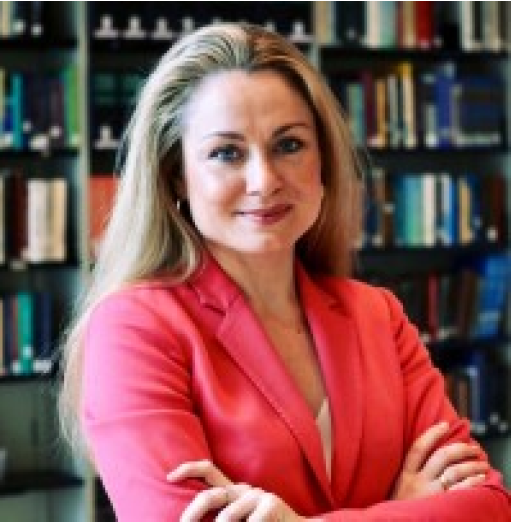 Dr. Aleksandra DierGender Coordinator at the UN Security Council Counter-Terrorism Committee Executive Directorate (CTED)
Dr. Aleksandra Dier is the Head of the Gender Unit at the UN Security Council Counter-Terrorism Committee Executive Directorate (CTED). She has more than 15 years of experience working for the United Nations in the areas of conflict prevention and mediation, peacekeeping, women, peace and security, and counter-terrorism. She has served both at UN Headquarters as well as in Afghanistan, Burundi and the Middle East. Before joining the United Nations, Aleksandra was a Senior Research Fellow at the Center for Security Studies at ETH Zurich and the German Institute for International and Security Affairs (SWP) in Berlin. She received her Ph.D. in International Relations from the University of Oxford.
-
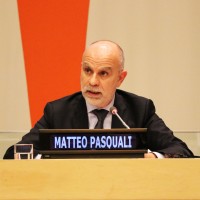 Mr. Matteo PasqualiMr. Matteo Pasquali, Deputy Representative, United Nations Office on Drugs and Crime (UNODC)
Matteo Pasquali has over twenty years of professional experience with the UN system, including thirteen years in developing countries as well as conflict affected and fragile states, (over 7 years of field experience in Afghanistan and
6 years of experience in the Eastern Africa Region and the
Horn of Africa).Between mid-2010 and mid-2015, Matteo Pasquali worked as the Head of the Criminal Justice Programme of the UNODC Regional Office for Eastern Africa. In this capacity, he undertook complex assessments of legislative frameworks and key justice institutions and supported the development of various programmes to reform the justice and security sectors within the Eastern Africa Region, Horn of Africa and the Indian Ocean Islands.
Before this assignment, he worked in Afghanistan as a Senior Criminal Justice Expert with UNODC (2005-2010) and Senior Legal Officer with the UN mission for the 2004 and 2005 Afghan Presidential and Parliamentary elections.
Since mid-2015, Matteo Pasquali has been serving as the Deputy Representative at the UNODC New York Office. Matteo Pasquali holds a Master’s degree in International Human Rights and Humanitarian Law from the Raoul Wallenberg Institute at Lund University, Sweden.
-
 Ms. Holly BurkhalterVice President for Government Relations of International Justice Mission (IJM)
Ms. Holly Burkhalter is a Senior Advisor at International Justice Mission’ Global Programs division. She has 40 years of experience as a government relations specialist with leading non-governmental organizations, including International Justice Mission, Physicians for Human Rights, and Human Rights Watch. Prior to her NGO career, Ms. Burkhalter was employed by the House of Representatives as a human rights specialist at the House Foreign Affairs Committee Subcommittee on Human Rights and International Organizations, and legislative staff to then-Representative Tom Harkin (D-IA.) In her current role at International Justice Mission, Ms. Burkhalter supports the organization’s specialists on trafficking and violence against women and children with research and writing.