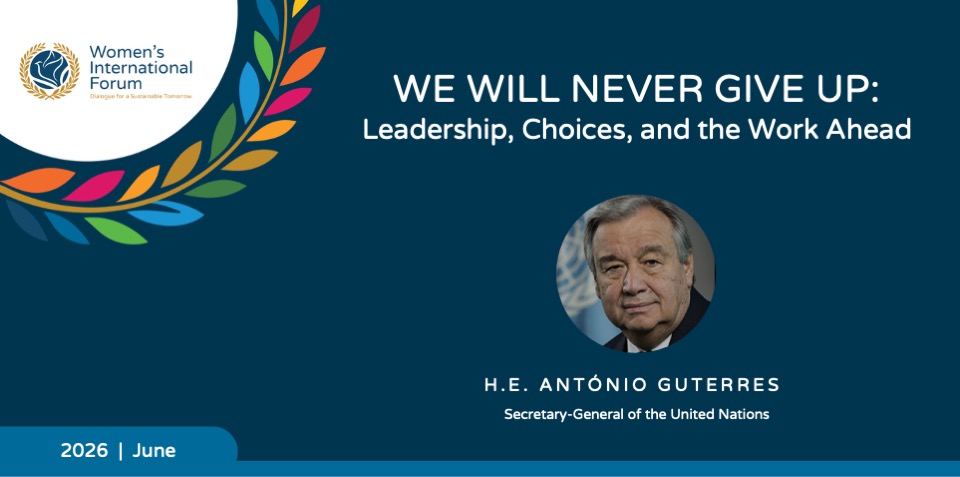
We Will Never Give Up: Leadership, Choices, and the Work Ahead
As the United Nations marks its eightieth anniversary, the international community continues to navigate a period of profound global complexity shaped by geopolitical tensions, humanitarian crises, climate pressures, economic uncertainty, and growing strain on multilateral cooperation. At the same time, these challenges have reinforced the continued importance of diplomacy, dialogue, and sustained international engagement. At the beginning of this year, United Nations Secretary-General, H.E. António Guterres reflected on the uncertainty facing the international community with a message that was both direct and resolute:
“We cannot predict what this new year will bring, but we do know this: The world needs the United Nations more than ever. We will always stand for peace, sustainable development and human rights. We will never compromise our principles. We will never give up.”
These remarks reflect a defining characteristic of the Secretary-General’s leadership: a consistent belief in the importance of multilateralism, solidarity, and principled international cooperation, even during periods of growing global uncertainty.
Throughout his tenure, the Secretary-General has remained a strong advocate for sustainable development, climate action, humanitarian response, and the protection of human dignity, while also emphasizing the importance of gender equality and women’s leadership as essential to building more peaceful, inclusive, and resilient societies. Under his leadership, the United Nations has continued advancing women into senior leadership positions while reinforcing the central importance of the Sustainable Development Goals at a time when global progress across many targets remains under increasing pressure.
Much of what sustains international cooperation often happens quietly through diplomacy, relationship-building, institutional continuity, and the persistence required to maintain dialogue even during periods of division and instability. Yet the United Nations itself is also navigating a moment of institutional strain, including widening financing gaps affecting humanitarian and development efforts, growing demands on the multilateral system, and increasing pressure to deliver meaningful collective action in an increasingly fragmented global environment.
In this context, the Women’s International Forum is honored to convene a special closing keynote conversation with the Secretary-General of the United Nations. Framed in a reflective and conversational format, the discussion will explore leadership during a period of global uncertainty, the evolving role of the United Nations beyond UN80, and the enduring importance of diplomacy, inclusive leadership, and international cooperation in shaping the decades ahead.
Objectives
This keynote conversation seeks to provide a forward-looking reflection on leadership, international cooperation, and the realities of navigating a rapidly evolving global landscape. Specifically, this session aims to:
- Reflect on the role of principled multilateral leadership in advancing international cooperation during periods of global uncertainty.
- Explore the realities of leadership during a period of heightened global complexity and geopolitical change.
- Discuss the future of multilateralism as the United Nations marks its eightieth anniversary amid growing pressure on the international system.
- Examine the institutional and financial pressures facing the United Nations, including the impact of funding constraints on humanitarian response, sustainable development, and peacebuilding efforts.
- Reaffirm the importance of the Sustainable Development Goals and the urgency of sustaining international momentum toward their implementation.
- Discuss the continued importance of advancing gender equality, strengthening women’s leadership, and expanding opportunities for women and girls within global decision-making and development efforts
Speaker
-
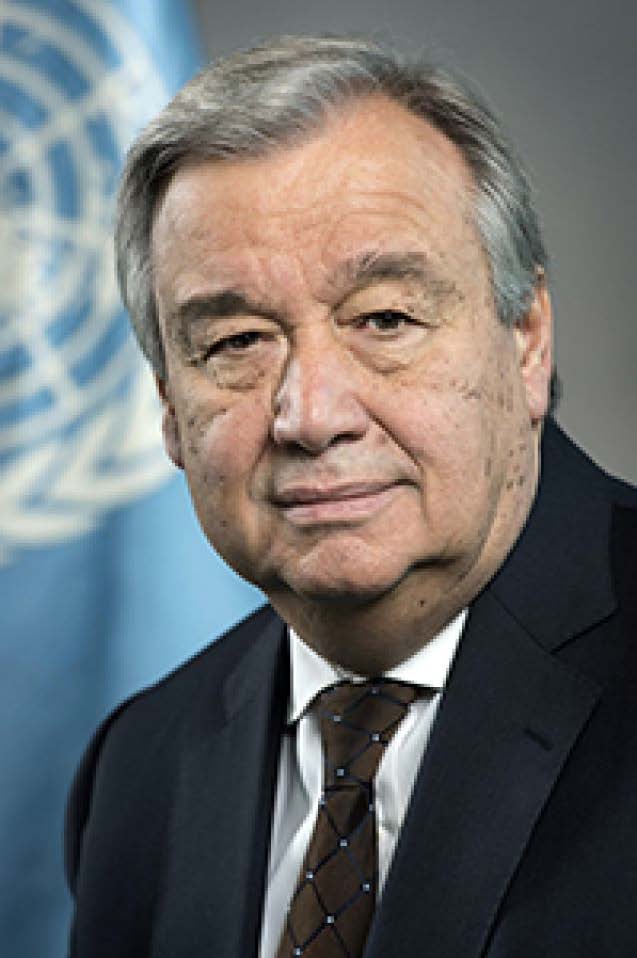 H.E. António GuterresSecretary-General of the United Nations
António Guterres, the ninth Secretary-General of the United Nations, took office on 1st January 2017.
Having witnessed the suffering of the most vulnerable people on earth, from refugee camps to war zones, the Secretary-General has centered his efforts on ensuring human dignity for all. In a period of unprecedented global challenges, he has drawn on his commitment to the UN Charter to mobilize people and launch action to respond to the COVID-19 pandemic, address the climate emergency, advance gender equality, and achieve ambitious 21st century reforms to enhance the Organization’s vital efforts to secure peace, sustainable development, human rights and humanitarian aid.
Prior to his appointment as Secretary-General, Mr. Guterres served as United Nations High Commissioner for Refugees from June 2005 to December 2015, heading one of the world’s foremost humanitarian organizations during some of the most serious displacement crises in decades. The conflicts in Syria and Iraq, and the crises in South Sudan, the Central African Republic and Yemen, led to a huge rise in UNHCR’s activities as the number of people displaced by conflict and persecution rose from 38 million in 2005 to over 60 million in 2015.
Before joining UNHCR, Mr. Guterres spent more than 20 years in government and public service. He served as prime minister of Portugal from 1995 to 2002, during which time he was heavily involved in the international effort to resolve the crisis in East Timor.
As president of the European Council in early 2000, he led the adoption of the Lisbon Agenda for growth and jobs, and co-chaired the first European Union-Africa summit. He was a member of the Portuguese Council of State from 1991 to 2002.
Mr. Guterres was elected to the Portuguese Parliament in 1976 where he served as a member for 17 years. During that time, he chaired the Parliamentary Committee for Economy, Finance and Planning, and later the Parliamentary Committee for Territorial Administration, Municipalities and Environment. He was also leader of his party’s parliamentary group.
From 1981 to 1983, Mr. Guterres was a member of the Parliamentary Assembly of the Council of Europe, where he chaired the Committee on Demography, Migration and Refugees.
For many years Mr. Guterres was active in the Socialist International, a worldwide organization of social democratic political parties. He was the group’s vice-president from 1992 to 1999, co-chairing the African Committee and later the Development Committee. He served as President from 1999 until mid-2005. In addition, he founded the Portuguese Refugee Council as well as the Portuguese Consumers Association DECO, and served as president of the Centro de Acção Social Universitário, an association carrying out social development projects in poor neighbourhoods of Lisbon, in the early 1970s.
Mr. Guterres is a member of the Club of Madrid, a leadership alliance of democratic former presidents and prime ministers from around the world.
Mr. Guterres was born in Lisbon in 1949 and graduated from the Instituto Superior Técnico with a degree in engineering. He is fluent in Portuguese, English, French and Spanish. He is married to Catarina de Almeida Vaz Pinto and has two children, a stepson and three grandchildren.