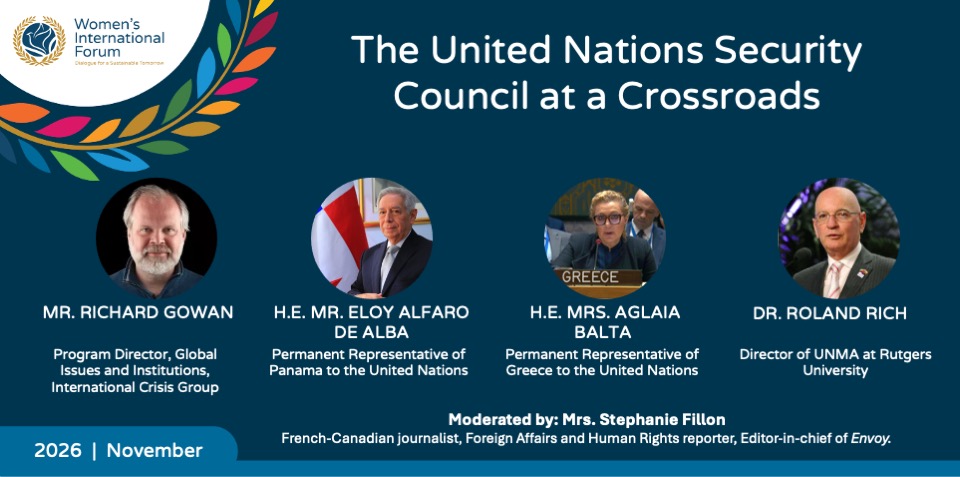
The United Nations Security Council at a Crossroads
Introduction
More than eight decades after the founding of the United Nations (UN), the international system faces converging pressures: protracted armed conflicts, mass displacement, financial constraints, climate-related insecurity, and declining confidence in multilateral institutions.
At the centre of these pressures stands the Security Council (SC). Its legitimacy and effectiveness are increasingly questioned, even as its responsibilities remain indispensable.
Greece and Panama are concluding their terms as elected members of the Council and will kindly share their views and experience of the work at the UNSC. This dialogue offers a timely opportunity to reflect on the role of the Security Council, its record, the need for reform and the role of women in shaping the future of international peace and security.
The Security Council: An Overview
The Council is one of the six principal organs of the UN and bears primary responsibility for maintaining international peace and security. It assesses threats to peace, urges parties to settle disputes through negotiation. It also authorizes peacekeeping missions, imposes sanctions such as arms embargoes, and, in certain cases, authorizes the use of force. Its agenda extends from specific conflicts to wider concerns including terrorism, nuclear proliferation, the protection of civilians, and women’s participation in peace efforts. Currently there are 65 armed conflicts, 60 countries involved, 122 million people displaced globally, and hundreds and thousands of people killed. You can find more information about the Security Council here.
Structure
The Council has fifteen members. Five are permanent: China, France, the Russian Federation, the United Kingdom and the United States. The General Assembly elects the other ten for two-year terms, five each year. The current non-permanent members serving on the Council are Bahrain, Colombia, Democratic Republic of Congo, Denmark, Greece, Latvia, Liberia, Pakistan, Panama and Somalia.
The Secretary-General selection
This year is the end of the 10 year tenure of present Secretary-General Antonio Guetteres. The next Secretary-General will shape the Organization’s leadership for the coming decade. Member States nominate candidates, who present their priorities in public sessions. The Council deliberates privately and uses informal straw polls to gauge support. A formal recommendation requires at least nine votes in favour and no veto from a permanent member. Under Article 97 of the Charter, the General Assembly then appoints the recommended candidate, usually for a renewable five-year term. This division of responsibility gives the five permanent members considerable influence and raises a central question: how far does the process reflect the wishes of the full membership?
Once appointed, the Secretary-General serves all Member States. The role requires the ability to earn the trust of governments, sustain diplomacy during moments of crisis, exercise independent judgment, and uphold the principles of the Charter when they are under greatest pressure. As the United Nations’ chief administrative officer and de facto leader, the Secretary-General is commonly responsible for preparing the organization’s budget, overseeing peacekeeping operations, mediating conflicts, and coordinating the UN’s response to global emergencies.
Objectives
- Assess the Council’s effectiveness and legitimacy in today’s geopolitical environment
- Draw lessons from the experience of elected members, particularly Greece and Panama
- Examine ways to strengthen the implementation of the Women, Peace and Security agenda
- Reflect on what the Secretary-General selection means for gender equality and multilateral renewal
Guiding Questions
- How can the Council restore its credibility when divisions among permanent members block action?
- What can elected members concretely contribute within the current structure?
- Which reforms are both meaningful and politically achievable in the near term?
- How can women’s participation move from commitment to consistent practice in peace processes?
- What would the appointment of the first woman Secretary-General signal for the future of the UN mean?
- What should be the immediate priorities of the new Secretary-General?
Speakers
-
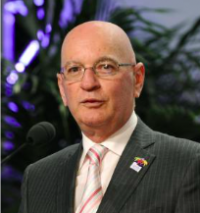 Dr. Roland RichDirector of UNMA at Rutgers University
-
 H.E. Mr. Eloy Alfaro de AlbaPermanent Representative of Panama to the United Nations
-
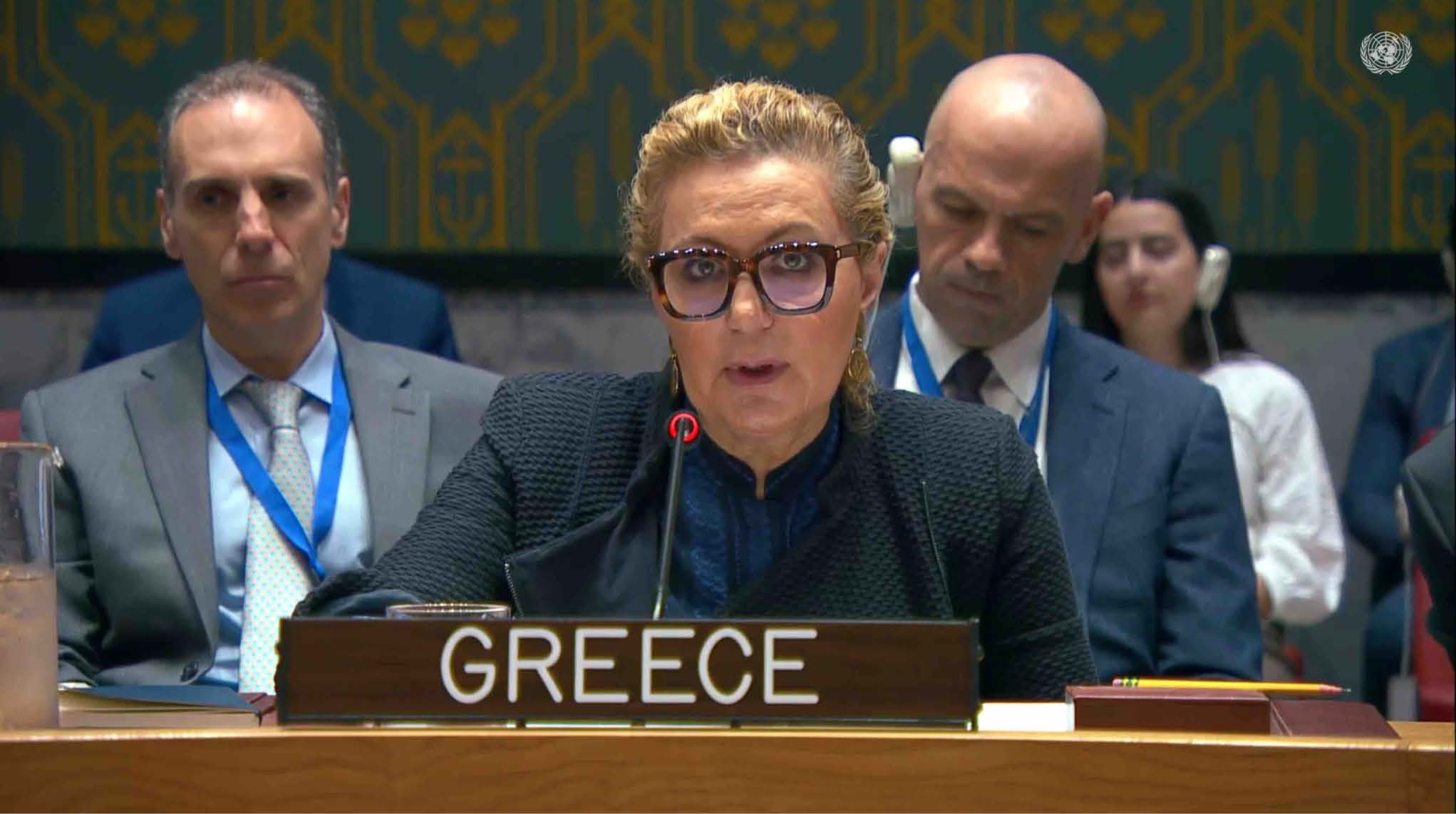 H.E. Mrs. Aglaia BaltaPermanent Representative of Greece to the United Nations
The Permanent Representative of Greece to the United Nations presented
her credentials to H.E. the Secretary-General Mr. Antonio Guterres on August 25, 2025. She holds a Law Degree from Athens University, Greece.
Prior to her appointment, she held the position of Ambassador of Greece to Spain.From 2022 to 2024 she was the Chief of Protocol at the Ministry of Foreign Affairs, during which she was promoted to the rank of full Ambassador. Her leadership roles also include Ambassador of Greece to France from 2018 to 2022, Ambassador of Greece to Chile from 2012 to 2016, and Consul General of Greece in New York from 2008 to 2012.
She has served as Deputy Representative to Greece’s Political Security Committee (PSC) at the EU (1999-2003), and as European Correspondent at the Ministry of Foreign Affairs (2004-2007). She began her diplomatic career at the Ministry of Foreign Affairs in Athens, serving in the Diplomatic Cabinet of the President. Her early postings abroad included Consul in London and First Secretary at the Embassy of Greece in Seoul.
Ambassador Balta is fluent in English, French, and Spanish.
-
 Mr. Richard GowanDirector of UN and Multilateral Diplomacy at Crisis Group