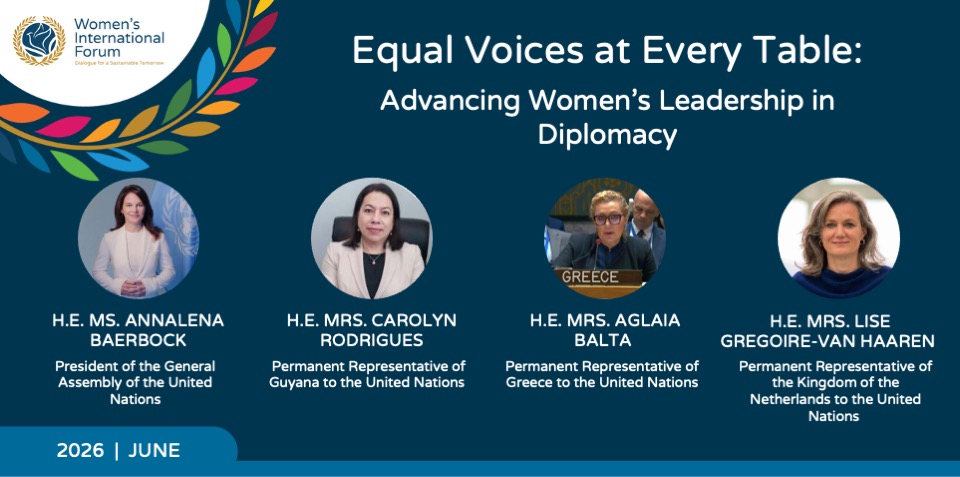
Equal Voices at Every Table: Advancing Women’s Leadership in Diplomacy
Despite decades of commitments and growing global awareness, women remain critically underrepresented across the senior ranks of diplomacy, peacebuilding, and international leadership. From foreign ministries and multilateral institutions to peace negotiation tables and mediation processes, the structures of global governance continue to reflect deep-seated inequalities that limit women’s full and equal participation. According to the 2025 Women in Diplomacy Index, women hold only 22.5% of ambassadorial and permanent representative positions worldwide, At the United Nations, women make up only 21% of permanent representatives, and since 1947, a mere 7% of all ambassadors have been women. Seventy-three countries have never appointed a female permanent representative to the UN.
At the same time, the global context makes women’s leadership more urgent than ever. Conflicts are increasing worldwide, with the number of active conflicts now at its highest level in over 70 years. Armed conflict disproportionately affects women and girls, exacerbating insecurity, displacement, and gender-based violence across regions.
Twenty-six years ago, the United Nations Security Council adopted Resolution 1325 (2000), recognizing the critical link between peace and security, gender equality, and women’s leadership. Since then, nine additional resolutions have expanded the Women, Peace and Security (WPS) agenda, reaffirming the importance of women’s meaningful participation in conflict prevention, mediation, peacebuilding, and post-conflict recovery.
Evidence consistently demonstrates that women’s participation strengthens the durability and legitimacy of peace processes and political transitions. Yet women continue to remain significantly excluded from formal negotiations, comprising only 7% of negotiators and 14% of mediators in formal peace processes globally, according to UN Women. The United Nations Secretary-General has repeatedly called for women to constitute at least one-third of all participants in UN-led or co-led peace processes.
Progress has been made, but it remains uneven and fragile. The barriers women face in reaching and exercising leadership in diplomacy and peace and security spaces are structural — embedded in institutional cultures, recruitment and promotion systems, unequal access to networks and sponsorship, and the persistent imbalance of professional and caregiving responsibilities.
Against this backdrop, and on the occasion of the International Day for Women in Diplomacy, this high-level dialogue convened by the Women’s Circle and the Women’s International Forum (WIF) will bring together members of WIF, the Circle of Women Permanent Representatives, women ambassadors and Deputy Permanent Representatives, senior UN women leaders, academics, and practitioners to discuss how to move beyond symbolic commitments toward meaningful and lasting change.
Objectives:
- Provide a forum for candid exchange on the status of women’s representation in diplomacy, international organizations, and peace and security processes.
- Examine the structural and cultural barriers that continue to limit women’s access to and exercise of leadership in global institutions and formal peace negotiations.
- Explore the role of mentorship, sponsorship, and institutional support in advancing younger generations of women leaders in diplomacy and peacebuilding.
- Reinforce the evidence that diverse leadership and women’s participation contribute to more effective diplomacy, more durable peace agreements, and more inclusive policymaking outcomes.
- Identify practical steps that institutions, member states, and individuals can take to create more equitable negotiation spaces and decision-making bodies.
- Encourage reflection on the shared responsibility of all actors in advancing gender equality across global governance and peace and security institutions.
ISIT THE DIALOGUE GALLERY
Speakers
-
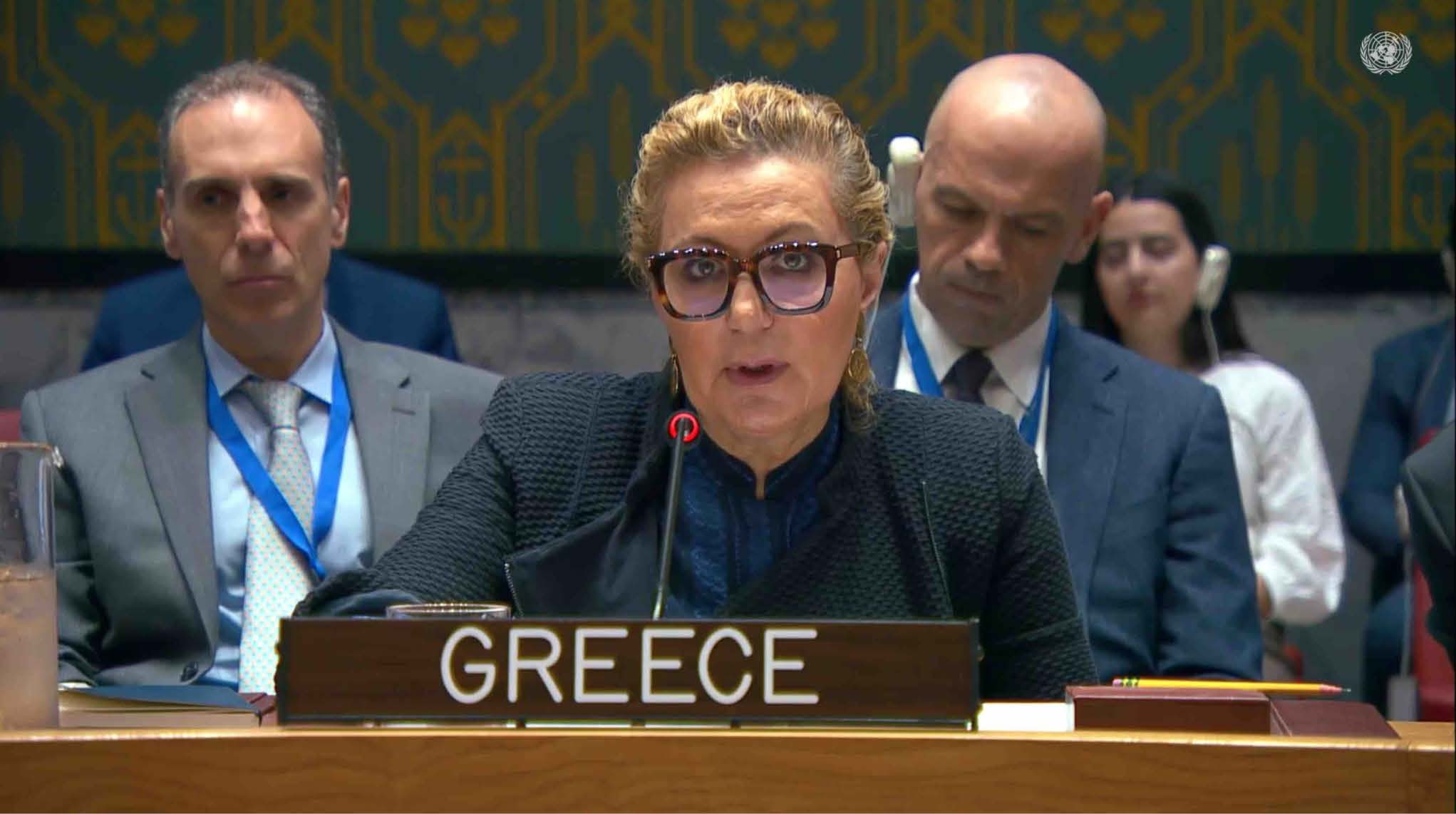 H.E. Mrs. Aglaia BaltaPermanent Representative of Greece to the United Nations
The Permanent Representative of Greece to the United Nations presented
her credentials to H.E. the Secretary-General Mr. Antonio Guterres on August 25, 2025. She holds a Law Degree from Athens University, Greece.
Prior to her appointment, she held the position of Ambassador of Greece to Spain.From 2022 to 2024 she was the Chief of Protocol at the Ministry of Foreign Affairs, during which she was promoted to the rank of full Ambassador. Her leadership roles also include Ambassador of Greece to France from 2018 to 2022, Ambassador of Greece to Chile from 2012 to 2016, and Consul General of Greece in New York from 2008 to 2012.
She has served as Deputy Representative to Greece’s Political Security Committee (PSC) at the EU (1999-2003), and as European Correspondent at the Ministry of Foreign Affairs (2004-2007). She began her diplomatic career at the Ministry of Foreign Affairs in Athens, serving in the Diplomatic Cabinet of the President. Her early postings abroad included Consul in London and First Secretary at the Embassy of Greece in Seoul.
Ambassador Balta is fluent in English, French, and Spanish.
-
 H.E. Mrs. Carolyn RodriguesPermanent Representative of the Co-operative Republic of Guyana to the United Nations
H.E. Carolyn Rodrigues-Birkett is the Permanent Representative of Guyana to the United Nations and one of Guyana’s most distinguished diplomats and public servants.
With more than 25 years of experience in national government, international organizations, and multilateral diplomacy, she has served as Minister of Foreign Affairs, Foreign Trade and International Cooperation, Minister of Amerindian Affairs, Member of Parliament, senior official with the United Nations Food and Agriculture Organization (FAO), and now as Guyana’s Permanent Representative to the United Nations.
As Foreign Minister, she became both the first woman and youngest person to hold the position, where she championed regional integration, strengthened Guyana’s international partnerships, and advanced the interests of developing countries and Small Island Developing States. As Minister of Amerindian Affairs, she led landmark reforms to advance Indigenous Peoples’ rights and community development. Since 2020, Ambassador Rodrigues-Birkett has represented Guyana at the United Nations, including leading Guyana’s delegation during its 2024–2025 tenure on the Security Council and serving as Chair of the Group of 77 and China. Throughout her career, she has been a steadfast advocate for multilateral cooperation, sustainable development, and inclusive leadership.
-
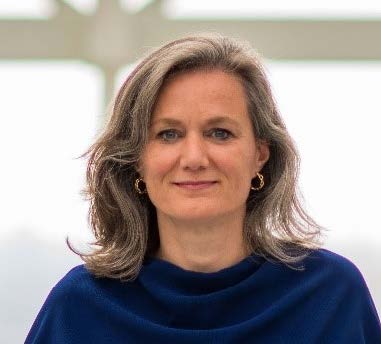 H.E. Mrs. Lise Gregoire-van HaarenPermanent Representative of the Kingdom of the Netherlands to the United Nations
Prior to this position, from August 2019 to August 2024, she was Director responsible for European Union affairs at the Netherlands Ministry of Foreign Affairs as well as deputy Director-General for European Cooperation.
From 2016 to 2019 she was (the first female) Ambassador – Deputy Permanent
Representative – of the Kingdom of the Netherlands to the United Nations in New York and one of the two Ambassadors representing the Kingdom in the UN Security Council (2018).Before joining the Permanent Mission in New York, Mrs. Gregoire-van Haaren was Head of the Political Affairs department in the Netherlands Ministry of Foreign Affairs in The Hague, a post she held since 2013. Prior to that, from 2009 to 2013, she was Counsellor (Antici) at the Permanent Representation of the Netherlands to the European Union in Brussels.
Her first posting abroad was at the Netherlands Embassy in Paris, as First Secretary Political Affairs, from 2005 to 2009. In the run-up to that posting, she studied at the Ecole Nationale d’Administration. After fulfilling her diplomatic training, she held several positions in the Ministry of Foreign Affairs, including as Advisor to the Director-General Regional Policy and Consular Affairs (2001-2004) as well as Policy Officer EU asylum and Migration policy (2000-2001).
Before her diplomatic career, she worked as a Policy Officer at the Ministry of the Interior and Kingdom Relations of the Netherlands in The Hague and at the
Directorate-General Justice and Home Affairs of the European Commission in
Brussels. During and after her studies, she did several traineeships in Paris, Utrecht and Ankara.Born in Ede in August 1974, Mrs. Gregoire-van Haaren holds a degree in Business Communication Studies from Radboud University Nijmegen. She graduated from the Ecole Nationale d’Administration in Strasbourg (Promotion Martin Luther King). During her studies in Nijmegen she did a one year Erasmus-exchange at the Ecole commerciale de la Chambre de Commerce et d’Industries de Paris. She holds several certificates of Italian language studies at Universita’ degli studi di Firenze. She is married to Mr. Emile Gregoire, with one son.
-
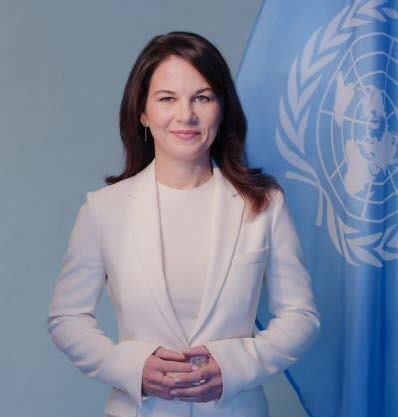 H.E. Ms. Annalena BaerbockPresident of the General Assembly of the United Nations
Ambassador Annalena Baerbock served as Germany’s Federal Minister for Foreign Affairs from December 2021 until May 2025. Throughout her career she has been a strong advocate for the multilateral system, human rights, and climate policy. She was an elected member of the German Parliament (Deutscher Bundestag) from 2013 until June 2025. In 2018, she was elected co-chairperson of the Green Party and held the position of party leader until 2022. Prior to becoming an MP, Annalena Baerbock advised her party’s parliamentary group in the German Bundestag on foreign and security policy and served as chairperson of her party in the federal state of Brandenburg. From 2005 to 2008 she worked for a Member of the European Parliament. Annalena Baerbock holds a Master of Laws (LLM) from the London School of Economics and Political Science and an undergraduate degree in Political Science from Hamburg University.
She was born in Hanover on 15 December 1980 and has two daughters.