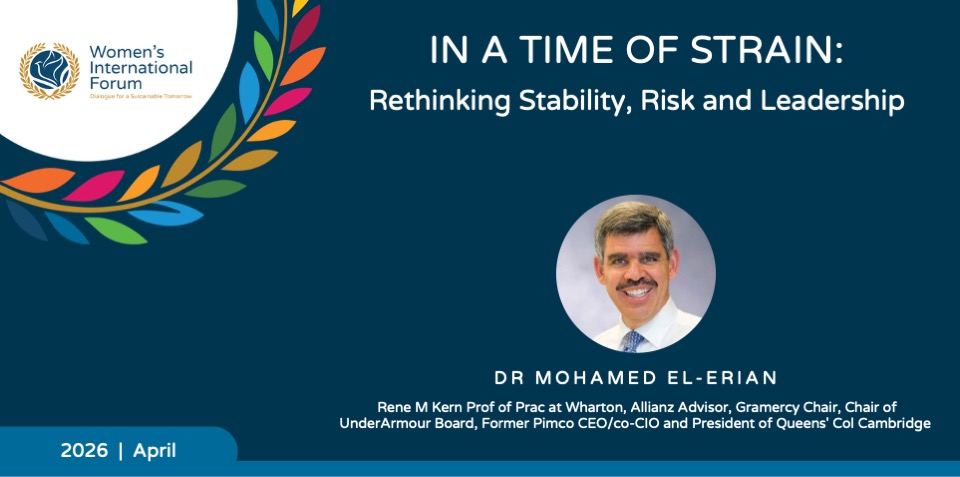
In a Time of Strain: Rethinking Stability, Risk and Leadership
The global economy is entering a period of heightened strain, shaped by the convergence of geopolitical tension and underlying structural fragility. Recent developments, including the ongoing Iran conflict, have introduced a new layer of volatility into an already complex system—highlighting the extent to which global risks are increasingly interconnected and system-wide in their implications. Disruptions to critical chokepoints such as the Strait of Hormuz—through which a significant share of globally traded energy flows—carry consequences that extend well beyond immediate market reactions. Shocks to energy supply can cascade through financial systems and supply chains, intensify inflationary pressures, and further constrain policy space at a time when central banks are already operating under significant limitations. As highlighted in the work of Dr. Mohamed El-Erian, these developments reflect a broader shift in the structure of the global economy, where risks are no longer discrete or isolated, but compounding and mutually reinforcing. In parallel, multilateral institutions—long relied upon to stabilize such moments—are being tested in new ways, raising questions about their capacity and effectiveness in an increasingly complex risk environment.
Speaker
-
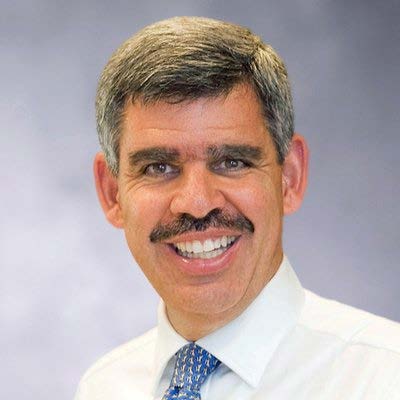 Dr. Mohamed El-ErianRene M Kern Prof of Prac at Wharton, Allianz Advisor, Gramercy Chair, Chair of UnderArmour Board, Former Pimco CEO/co-CIO and President of Queens' Col Cambridge
Dr. Mohamed El-Erian is one of the most consequential economic voices of our era. He has served as Deputy Director of the International Monetary Fund, CEO of Harvard Management Company, co-CEO of PIMCO, and currently serves as President of Queens’ College, Cambridge. He is a contributing columnist at the Financial Times and Bloomberg Opinion, and a trusted commentator on the intersection of geopolitics, monetary policy, and global financial stability. His recent interventions have focused on the Iran conflict’s market implications, the risks of stagflation, the stress building in private credit markets, and the dangerous gap between investor complacency and compounding systemic risks.