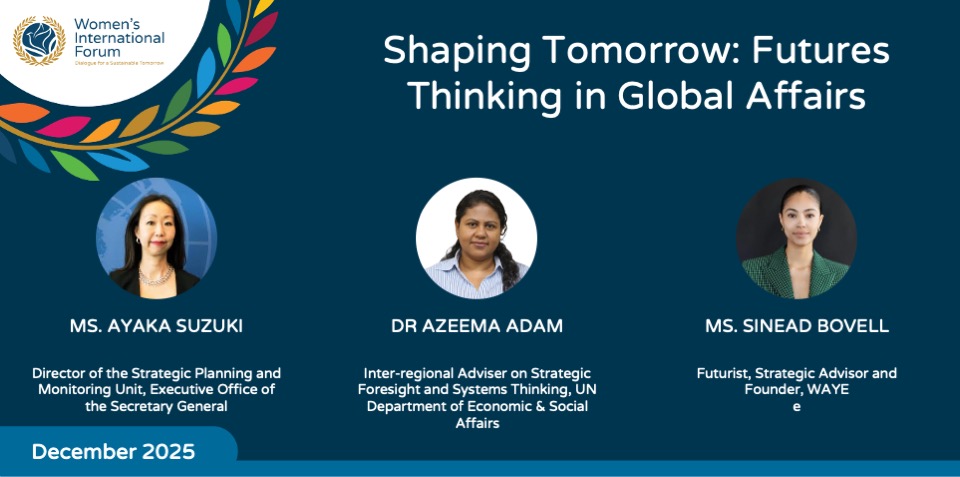
Shaping Tomorrow: Futures Thinking in Global Affairs
Is a global war imminent? What will the multilateral system look like in 2050? Are we on track to achieve the Sustainable Development Goals by 2030? Where is global warming headed? What will democracy look like in the future? How will AI affect our lives in 10 years from now?
No-one can predict the future, especially in a world that is increasingly volatile, uncertain and complex but we can think about what the future might look like and translate those insights into possible actions and solutions to address global challenges – in other words, futures thinking.
This strategic approach allows us to move beyond traditional approaches that rely on reacting to crises or finding short-term solutions. It gives us the ability to step back, to imagine multiple possibilities, and to explore how today’s decisions might ripple into tomorrow.
At its core, futures thinking is about preparing for uncertainty. It invites us to consider a range of scenarios whether that be renewed cooperation or deepening rivalry, a climate emergency to manage or a green transition unlocking opportunity, an AI revolution that empowers humanity or destabilizes it. By entertaining these possibilities, we become better equipped to help shape outcomes rather than be shaped by them.
Multilateralism, in particular, stands to gain from this approach.
The institutions that underpin global governance were designed in another era, yet they must now respond to challenges that look very different. Futures thinking can help them become more agile, resilient, and inclusive—able to adapt to shifting power, technology, and environmental realities while still serving their core purpose of collective problem-solving.
With panelists, Ms Ayaka Suzuki, Director of the Strategic Planning and Monitoring Unit within the Executive Office of the UN Secretary General; Dr. Azeema Adam, UN Inter-regional Adviser on Strategic Foresight and Systems Thinking; and Sinead Bovell, Futurist and Founder of tech education company, WAYE, the discussion will focus on the following objectives:
- Provide an understanding of futures thinking as a strategic approach to finding solutions to global problems.
- Explore how futures thinking can help us navigate uncertainty and complexity in global affairs.
- Examine how futures thinking can help to strengthen multilateralism and international cooperation and make it more adaptive and inclusive.
- Analyse examples of futures thinking in action in the UN and other contexts.
- Explore the role of individuals and communities in shaping the future.
Visit the Dialogue Gallery
Speakers
-
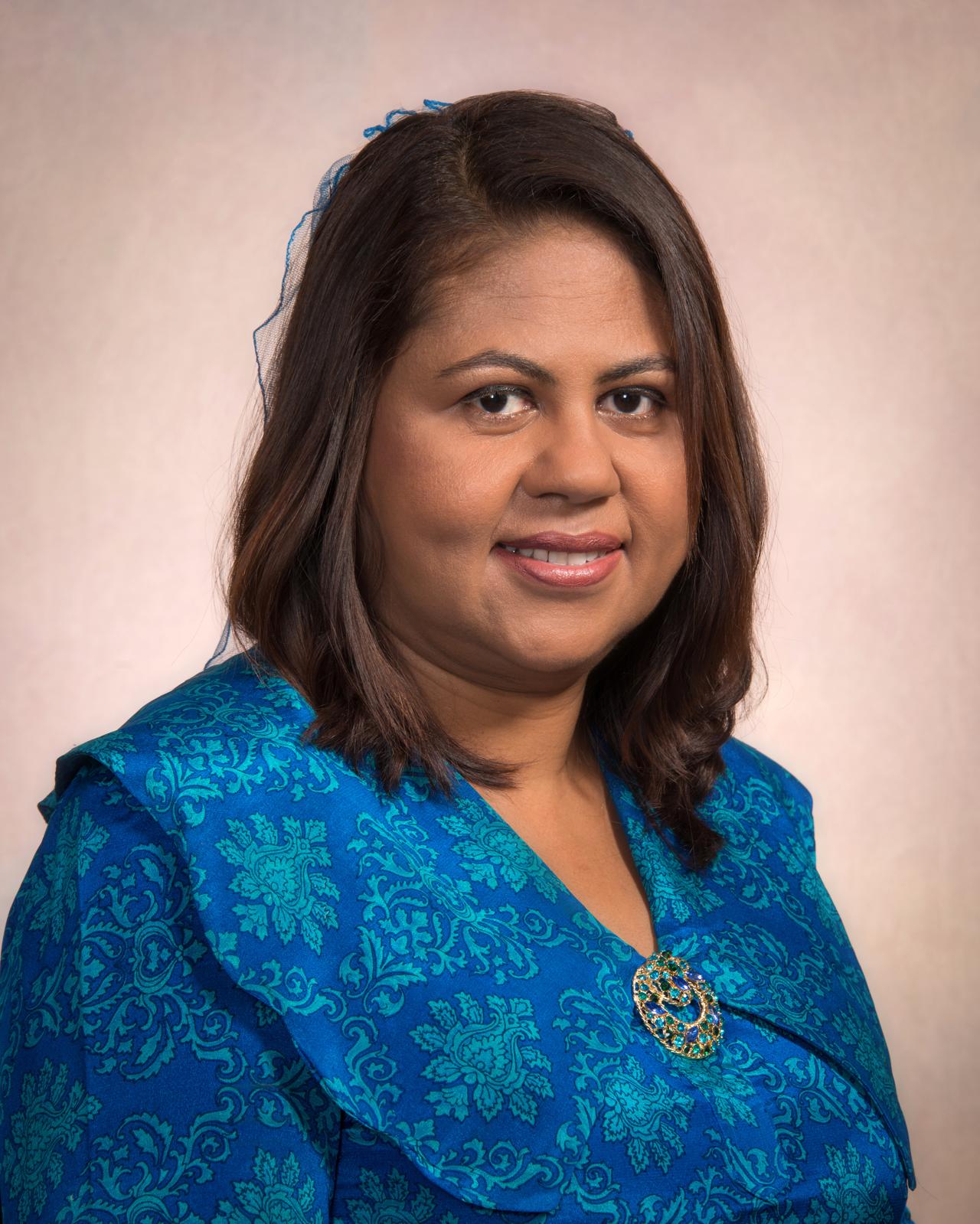 Dr. Azeema AdamInter-regional Adviser on Strategic Foresights and Systems Thinking at the UN Department of Economic and Social Affairs
Dr. Azeema Adam is an accomplished economist and central banker with over 30 years of experience in macroeconomic policy, financial sector development, and sustainable finance. She currently serves as an Inter-regional Adviser on Strategic Foresight and Systems Thinking at the United Nations Department of Economic and Social Affairs, where she helps governments to build capacity on futures thinking to strengthen policy coherence and integrated planning. Earlier, she worked in the Executive Office of the UN Secretary-General, where she developed the Secretary-General’s Roadmap for Financing the 2030 Agenda.
Dr. Azeema was the first female Governor of the Central Bank of the Maldives (Maldives Monetary Authority) where she led major financial sector reforms and advanced financial inclusion. She began her career at the Central Bank as a Research Officer Trainee and rose through successive positions, including Chief Economist, where she led research, launched the Bank’s first economic journal, MMA Research Papers, and published analytical work that strengthened evidence-based policymaking.
She holds a PhD in Economics from the University of Canberra, Australia and an MSc in International Development and Finance from the University of Leicester, United Kingdom
-
 Ms. Ayaka SuzukiInter-regional Adviser on Strategic Foresight and Systems Thinking, UN Department of Economic & Social Affairs
Ms. Suzuki is a distinguished Japanese development economist whose main research interest is examining how developing countries can reduce poverty levels, with a particular focus on agricultural and industrial development.
She is a Professor in the Department of International Studies, Graduate School of Frontier Sciences, at the University of Tokyo, Japan. She also serves as Special Adviser to the President of the University of Tokyo and as Deputy Director General of the Division of University Corporate Relations. In these leadership capacities, she has championed initiatives to promote social entrepreneurship, foster international collaboration and enhance support for students from the Global South.
Ms. Suzuki serves as an Auditor for the Japanese Association for Development Economics, an Editorial Board Member for the Asian Development Review, and an Honorary Professor in the School of Accounting, Finance and Economics, the Division of Management, the University of Waikato (New Zealand). She was a Founding Board Member of the Japanese Association for Development Economics. Her previous positions include Associate/Assistant Professor and Head of the Department of International Studies, Graduate School of Frontier Sciences, the University of Tokyo; Assistant Professor, National Graduate Institute for Policy Studies (Japan); Visiting Scholar, School of Accounting, Finance and Economics, the Division of Management, the University of Waikato (New Zealand); Visiting Scholar at the Japan International Cooperation Agency (JICA) Research Institute; and policy advisory work with the Foundation for Advanced Studies on International Development.
Ms. Suzuki has published extensively on topics related to agricultural marketing and development economics. She holds a PhD in Development and Agricultural Economics from the University of California, Davis, United States; a Master of International Development Studies from the National Graduate Institute for Policy Studies, Japan; and a Bachelor of Arts in Literature from Waseda University, Japan. She is fluent in English, Japanese, and speaks basic Chinese (Mandarin).
-
 Sinead BovellFuturist, Strategic Advisor and Founder, WAYE
Sinead Bovell is a futurist and expert on artificial intelligence and emerging technologies. She advises senior leaders across governments, global corporations, and startups on how advanced technologies impact economic security, long-term strategy, and business innovation.
An 11-time United Nations speaker, Sinead has addressed presidents, royalty, and Fortune 500 executives on topics from synthetic biology to AI. She serves as an expert advisor to the UN AI Advisory Body, focusing on AI’s future impact on work and society.
Sinead has guided over 17,000 educators and policymakers worldwide in redesigning education for the AI era and recently earned professional credit for her SXSW talk on AI and education. She is also a respected tech commentator for CNN, NBC, and CTV.
Recognized by Afrotech, Mozilla Rise 25, and Vogue, Sinead is celebrated for making AI accessible and promoting responsible innovation. She holds an MBA from the University of Toronto and a background in finance and chemistry.