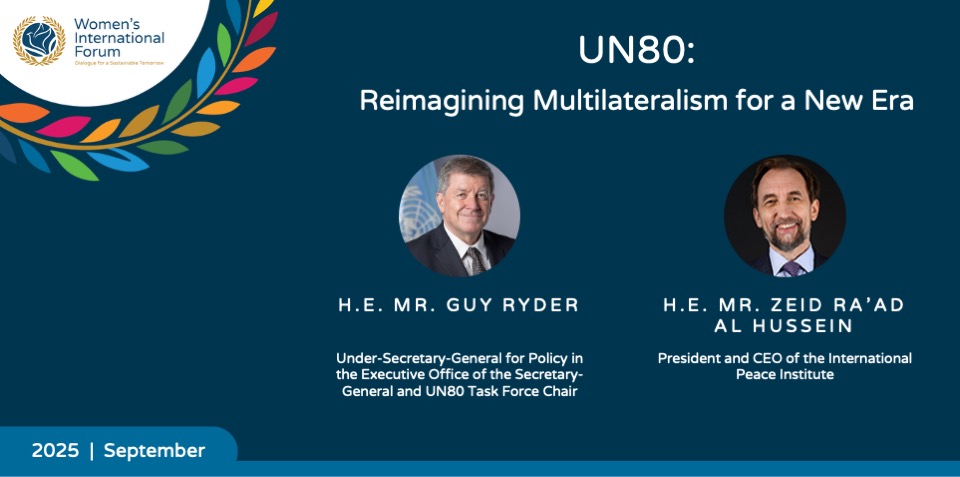
UN80: Reimagining Multilateralism for a New Era
Background:
2025 marks 80 years since the United Nations came into existence following the signing of its charter in June 1945. It was created with the stated purpose of maintaining international peace and security, providing humanitarian assistance to those in need, protecting human rights, and upholding international law. Over the course of its existence, the membership of the UN has increased considerably and correspondingly its work, and its targets have increased. In 2015, the UN members set for themselves a very ambitious Sustainable Development Agenda with 17 goals to be achieved by 2030.
As the United Nations marks its eightieth year, the multilateral system is under strain from rising geopolitical rivalries, ongoing conflicts, climate shocks, widening inequality, and fast-moving technology. Only 17 percent of the Sustainable Development Goals are on track, public trust in institutions is weak, and tremendous pressure is being placed on dwindling resources to meet increased mandates. For 2025, the UN Office for the Coordination for Humanitarian Affairs (OCHA) made an appeal for roughly $45 billion to assist about 181 million people in over 70 countries. However, as of June 2025, less than 13% of that amount have been received. These figures capture both the magnitude of need and the gaps in available resources that impact the effectiveness of the UN. A review is timely.
The UN80 Initiative as proposed by the UN Secretary General António Guterres invites a focused look at the future of multilateralism, the UN’s evolving role, and the policies and measures needed to meet today’s challenges. It comprises three “workstreams”: finding ways to improve efficiency, reviewing implementation of the UN’s mandates, and examining possible structural changes and program realignments.
Visit the Dialogue Gallery
Speakers
-
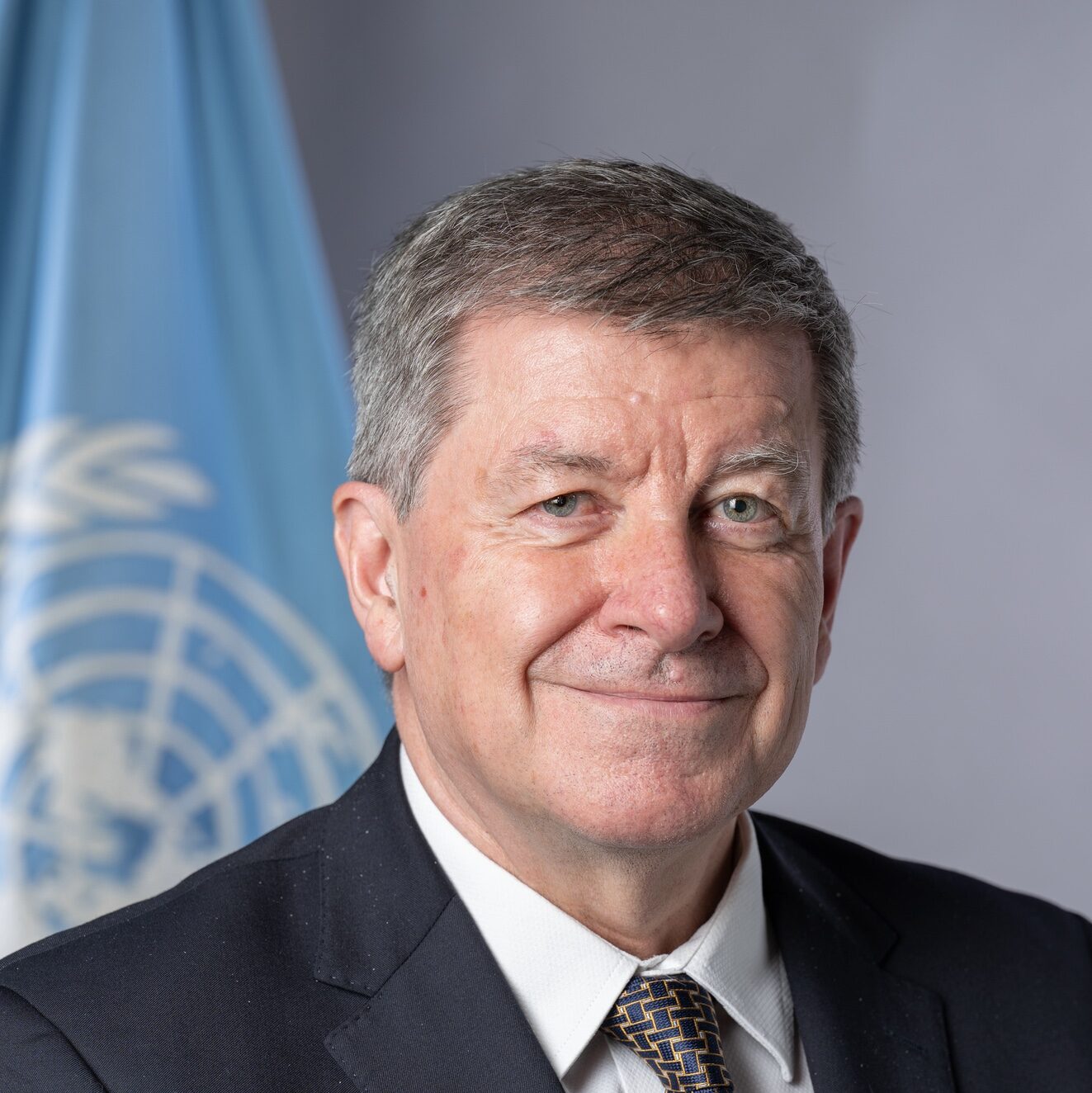 H.E. Mr Guy RyderUnder Secretary-General for Policy
United Nations Secretary-General António Guterres announced on 7 October 2022 the appointment of Guy Ryder of the United Kingdom as Under-Secretary-General for Policy in his Executive Office. He succeeded Volker Türk of Austria who has been appointed as United Nations High Commissioner for Human Rights.
Mr. Ryder was most recently Director-General of the International Labour Organization (ILO) in Geneva after serving two successive terms since October 2012.He first joined the ILO in 1998 as Director of the Bureau for Workers’ Activities and from 1999, served as Director of the Office of the Director-General. Mr. Ryder started his professional career in 1981 as an assistant at the International Department of the Trades Union Congress in London. From 1985, he held the position of Secretary of the Industry Trade Section of the International Federation of Commercial, Clerical, Professional and Technical Employees (FIET) in Geneva.
In 1988, he became Assistant Director and – from 1993 – Director of the Geneva office of the International Confederation of Free Trade Unions (ICFTU). In 2002, he was appointed General Secretary of the ICFTU and was elected as the first General Secretary of the International Trade Union Confederation (ITUC) when it was created in 2006. He returned to the ILO in 2010 as Executive Director, responsible for international labour standards and fundamental principles and rights at work.Mr. Ryder studied Social and Political Sciences at the University of Cambridge and Latin American Studies at the University of Liverpool. He speaks English, French and Spanish.
-
 Prince Zeid Ra’ad Al HusseinPresident and Chief Executive Of International Peace Institute (IPI)
Zeid Ra’ad Al Hussein is IPI’s President and Chief Executive Officer. Previously, Zeid served as the UN’s High Commissioner for Human Rights from 2014 to 2018 after a long career as a Jordanian diplomat, including as his country’s Permanent Representative to the UN (2000-2007 & 2010-2014) and Ambassador to the United States (2007-2010).
He served on the UN Security Council, was a configuration chair for the UN Peace-Building Commission, and began his career as a UN Peacekeeper in the former Yugoslavia. Zeid has also represented his country twice before the International Court of Justice, served as the President of the Assembly of State Parties to the Rome Statute of the International Criminal Court from 2002-2005, and in 2005, authored the first comprehensive strategy for the elimination of Sexual Exploitation and Abuse in UN Peacekeeping Operations while serving as an advisor to Secretary-General Kofi Annan.
Zeid is also a member of The Elders, an independent group of global leaders working together for peace, justice and human rights, founded by Nelson Mandela. Zeid holds a PhD from Cambridge University and is currently a Professor of Practice at the University of Pennsylvania.